


The Cost of War on China is Incalculable
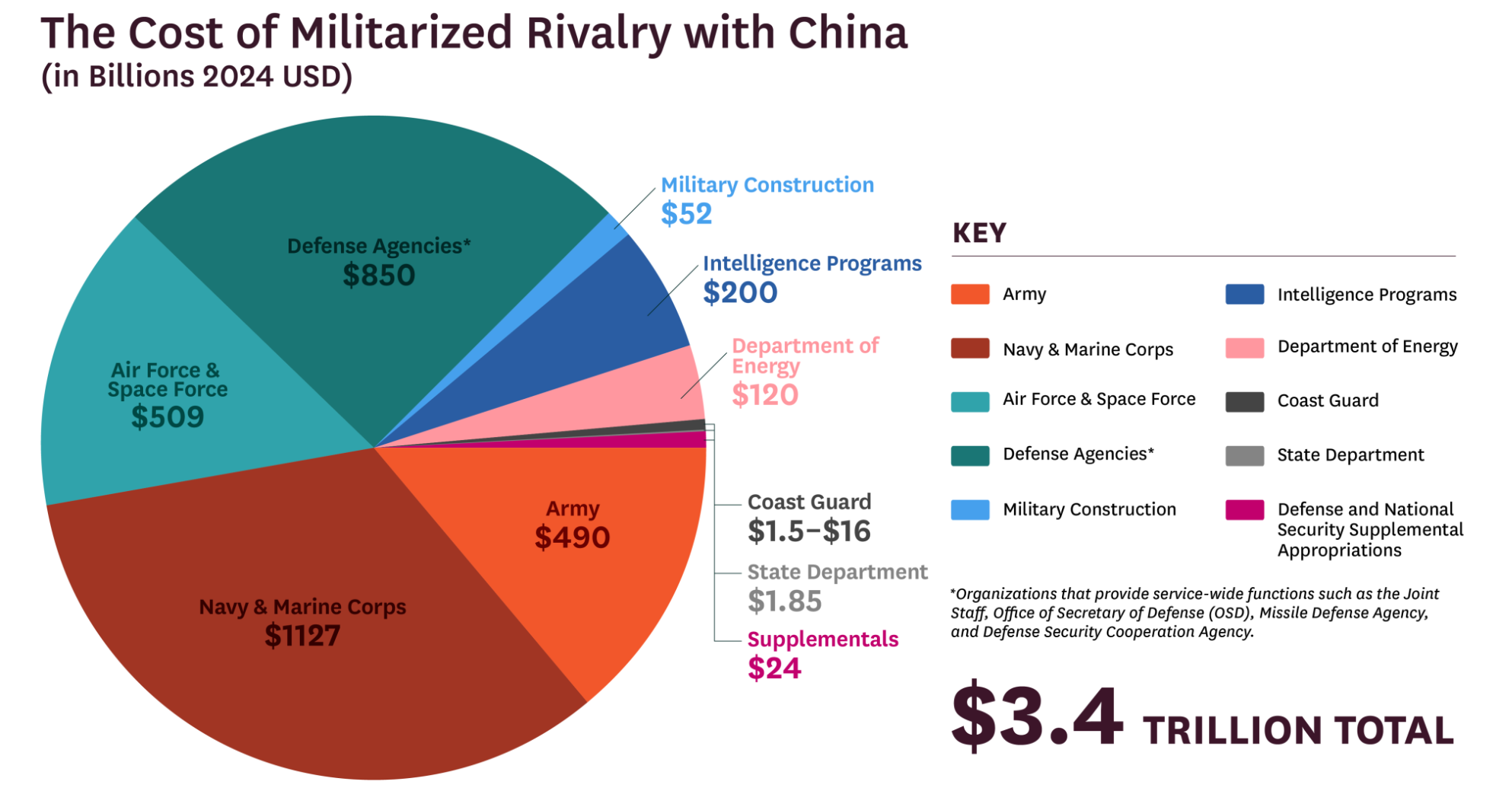
What does it cost to turn another country into an enemy? The United States has spent trillions of dollars on wars and military interventions, and now hundreds of billions more each year preparing for confrontation with China. Brown University’s Costs of War Project estimates that the U.S. has spent at least $3.4 trillion countering China militarily since 2012, an average of $260 billion every year.
But the price of militarism cannot be measured in dollars alone. There is the human cost of war: lives lost, civilians displaced, soldiers and veterans killed or traumatized, and communities torn apart. There is the economic cost of diverting public resources toward weapons and war instead of housing, healthcare, education, infrastructure, climate action, and human needs. There is the environmental cost of military bases, weapons production, fossil-fuel consumption, pollution, toxic contamination, and the destruction of ecosystems. And there is the political and social cost: endless militarization, erosion of civil liberties, racism and Sinophobia, hostility toward immigrants and Asian Americans, and the normalization of war as a solution to political problems.
Across the Pacific, these costs are already being borne by communities living alongside U.S. military bases and training grounds. The more we prepare for war, the more we build a world shaped by war. We should be asking what we could build with those resources if we stopped treating China as an enemy and began investing in diplomacy, climate cooperation, healthcare, education, and a future in which security means human wellbeing rather than military dominance.
Articles:
📰 Right-Wing Extremism and The Cold War Go Hand-In-Hand - From white supremacist settler aggression in Palestine to transphobic violence in the Philippines, the US war machine is fueling the same right-wing extremism responsible for the J6 Capitol riots.
Webinars:
📹 The Great Power Competition in Latin America? China’s BRI - Learn about neoliberalism in Latin America, the growth of the Belt and Road Initiative, and if there’s really a competition for influence between China and the US in the region.
📹 China Is Not Our Enemy: A Conversation with John Cavanagh - The Institute for Policy Studies’ John Cavanaugh shares findings from his report on the trade war on China and its cost on American workers.
📹 Hong Kong: From Royal Colony to Color Revolution - Pivot to Peace co-founder Julie Tang and Veterans for Peace’s Michael Wong unpack the context and consequences of British and American interference in Hong Kong
📹 China Is Not Our Enemy with Chris Hedges - Chris Hedges calls out the push for war with China as well as how militarism and the policing system in the US lead to far-right extremism.

Financial Costs
The U.S. has already spent enormous sums preparing for confrontation with China. Brown University’s Costs of War Project estimates that the United States spent at least $3.4 trillion on militarized competition with China between 2012 and 2024—about $260 billion every year.
Human Costs: At Home
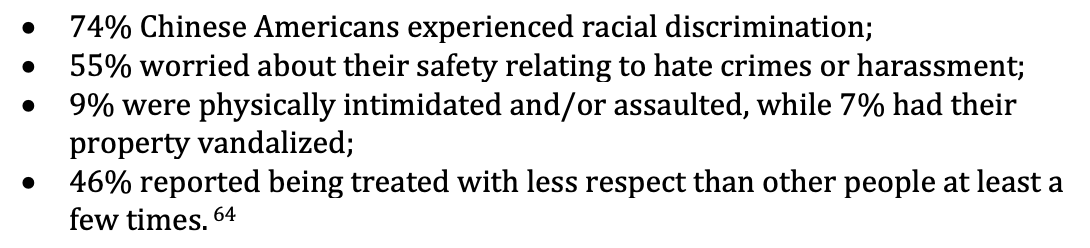
The rhetoric of China as an enemy has intensified anti-Asian and anti-Chinese racism, including hate crimes, suspicion and targeting of Chinese American scholars and students, and discriminatory policies. When an entire population is portrayed as a threat, ordinary people become targets.
👉 See our Stop the Hate on the AAPI Community page for more information.
Human Costs: Abroad
U.S. militarization also has consequences for people living where American forces, bases, and military exercises are concentrated. Communities across Okinawa, the Philippines, South Korea, Guam, and other Pacific locations have experienced displacement, pollution, accidents, sexual violence, and other harms associated with the U.S. military presence.
Environmental Costs
War preparation has an enormous environmental footprint. The U.S. military is one of the world's largest institutional greenhouse-gas emitters, while bases, weapons production, military exercises, and fuel consumption contribute to pollution, toxic contamination, habitat destruction, and climate change. Expanding the U.S. military presence across the Pacific means expanding that environmental burden in communities already facing the impacts of the climate crisis.
👉 See our Cooperate for People & Planet page for more information.