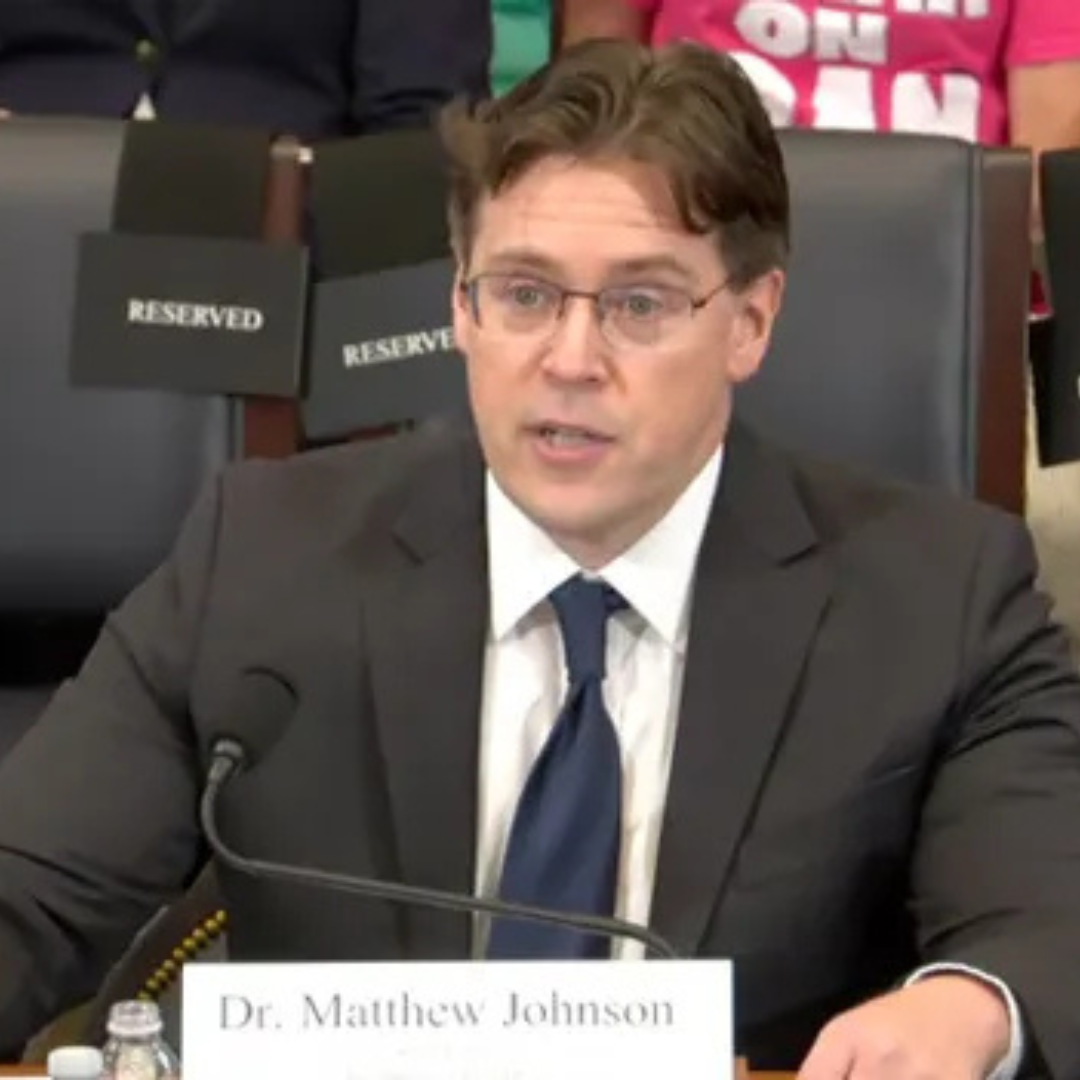
Matthew Johnson, senior fellow at the Jamestown Foundation, spoke in a Fox News interview leading up to his Congressional testimony, calling out CODEPINK's China Is Not Our Enemy campaign for “serving China’s interests” merely because we advocate for peace. In his testimony, he went further, suggesting that any American who promotes cooperation with China also advances positions “useful to Beijing.”
It’s as if he thinks war serves Americans. It doesn’t; it only serves the elite who profit off death and destruction. Americans don't need China to tell us that war is bad or that diplomacy is preferable. We organize for peace because we believe in peace. And peace serves the interests of all of humanity.
At a time when the U.S. is escalating its war drive against China and pouring billions more into militarizing the Pacific, we desperately need anti-war and anti-imperialist voices willing to challenge this dangerous trajectory. Peace activism is one of the most important checks on endless U.S. militarism, and silencing those voices only makes the march to war easier and faster.
A Note from Megan...
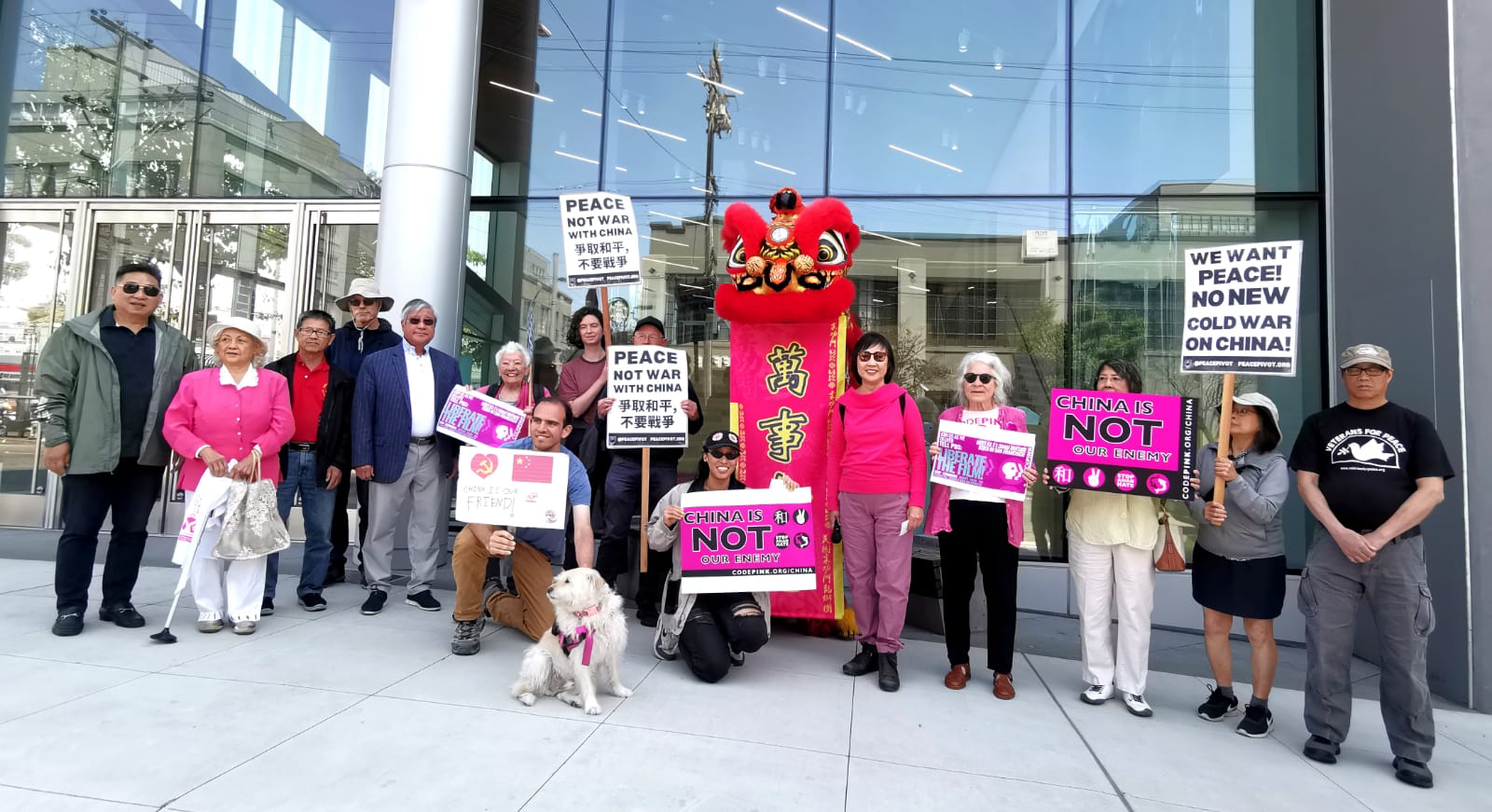
When I watched Matthew Johnson’s Fox News interview, all I could think about were the countless people across the U.S. and around the world who make up our China Is Not Our Enemy community. On our China Working Group call this week, one member said how much they love the humanity of our group, and I couldn’t agree more. The people I have met through this campaign are some of the most selfless, thoughtful, and courageous people I know. They stand fiercely for the wellbeing of people far beyond their own borders, and they put in the work to read, study, ask questions, and learn about China so that they can challenge misinformation and help others understand why China is not our enemy.
These are the very people Matthew Johnson is talking about when he describes independent Americans who advocate for peace with China. They are teachers, organizers, students, researchers, retirees, parents, and activists who have chosen to spend their time building understanding between peoples rather than fear between nations. They are people who have contributed so much time and effort to working toward a better world and brighter future for all.
There is something deeply revealing about where this accusation comes from. Johnson works within institutions whose structures are inseparable from the U.S. war economy, while many of the people he is criticizing work outside the institutions of power, challenging the assumptions that make endless military expansion seem normal. We should be asking whose voices are routinely amplified when billions of dollars are being poured into militarization, and whose voices are dismissed when they call for peace.
In the blood-soaked imperial core, it is always going to be the people speaking on behalf of the people. So let us continue to raise up the voices of these activists and spread the message of peace and humanity. Thank you to all who continue to do this work, even in the face of mounting political pressure. You are seen, appreciated, and dearly loved.
Toward liberation,

News & analysis
👉 The U.S. says AI safety matters, unless it benefits China. Anthropic CEO Dario Amodei warned that the AI industry may be moving faster than its safety measures can keep up. President Trump spoke out against slowing development, saying, “Whoever wins with AI wins,” while arguing that the U.S. cannot afford to lose its technological edge over China. Rather than turning AI into another front in a U.S.-China arms race, the U.S. should be working with China on global safety standards to prevent any catastrophic risk.
👉 Trump and Xi are preparing for a major U.S.-China summit in Washington this week. The two leaders are expected to discuss trade, Taiwan, critical minerals, and technology, with AI emerging as a particularly important area of discussion. At the same time, Trump has delayed a reported $14 billion U.S. weapons package to Taiwan, previously calling the arms sales a “very good negotiating chip.” This is the perfect representation of the two-faced nature of U.S. policy toward China, which pursues “negotiation” while simultaneously arming Taiwan and expanding preparations for a potential war in the Pacific.
👉 At the 18th BRICS summit this month, President Xi Jinping called on BRICS countries to strengthen unity among the Global South. This greater cooperation includes the promotion of sovereign equality, non-interference, and peaceful settlement of disputes. He also called for greater representation for developing countries in global institutions, arguing that the changing world economy requires a more representative international system.
Campaign events
|
|
|
|