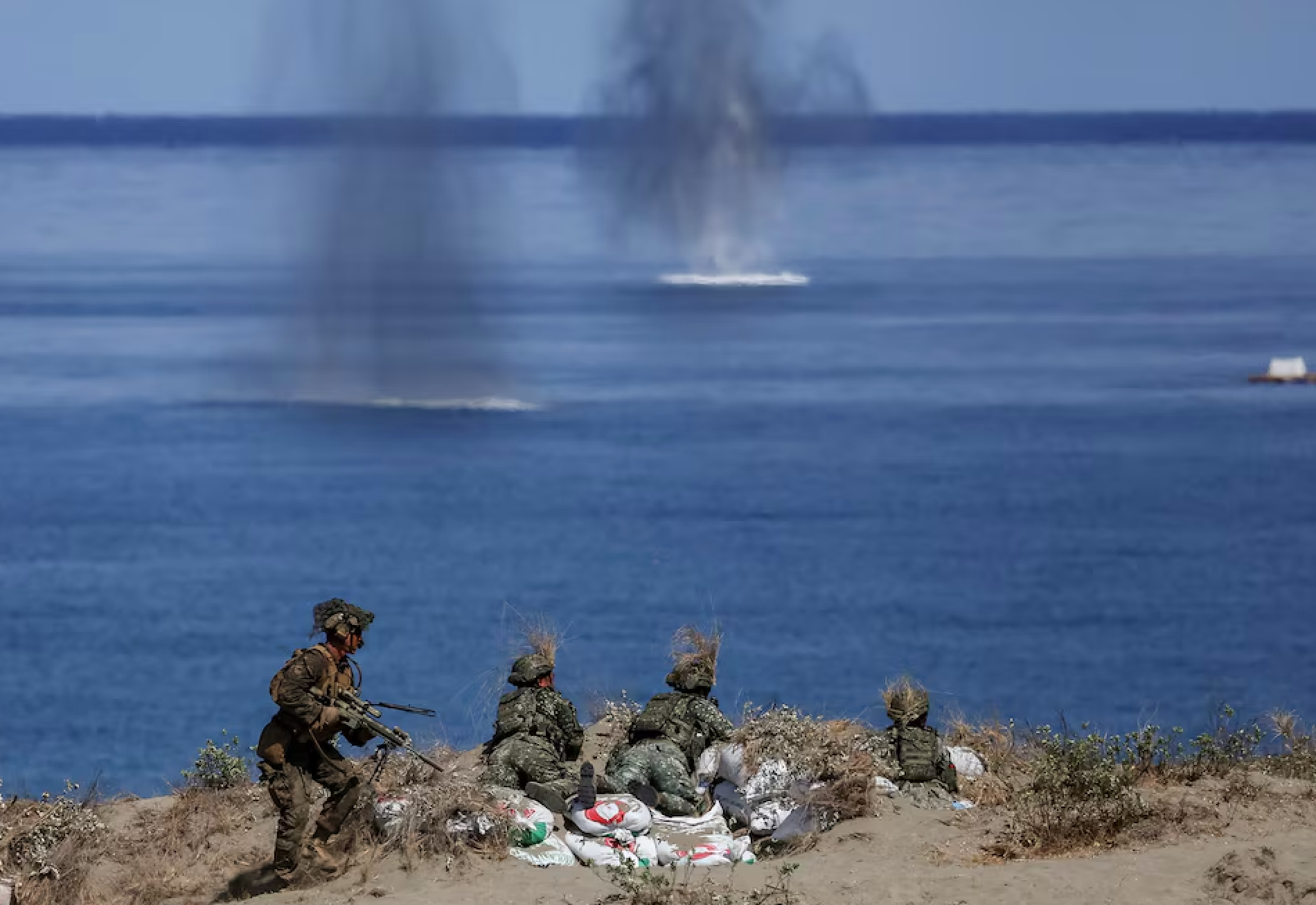
This month, as the United States launched RIMPAC — the largest naval war games in the world — across the Pacific, Super Typhoon Bavi slammed China and Pacific Island nations, once again exposing the vulnerability of the region on the frontlines of the climate crisis.
While climate experts rightly warn about rising temperatures and extreme weather, too few talk about the role of militarism. The U.S. military is the world's largest institutional polluter, and its escalating war on China is fueling more bases, more war games, and more environmental destruction across the Pacific. The drive to war also pulls resources and attention away from the international cooperation needed to tackle climate change.
Inside Climate News has published important reporting on China's renewable energy successes, but the story is incomplete without examining how U.S. militarism and the drive to war with China are harming the Pacific and undermining climate solutions.
A Note from Megan...
This week, in my hometown of Biddeford, Maine, ICE murdered an innocent man in front of his three-year old daughter. His name was Joan Sebastian Guerrero and he’s the 11th person to be fatally shot by ICE agents during the current administration.
I grew up in a place where people leave their doors unlocked. A place where children play outside long after the sun has gone down. They sent ICE to our streets, and now safety is no longer something that can be taken for granted.
Lately, I've been thinking about how the militarization of our communities at home mirrors what is happening abroad. They tell us that more weapons, more agents, and more military spending will keep us safe. But all I see is more fear, more violence, and more families being torn apart. Across the Pacific, communities are also living with the consequences of militarization driven by the U.S. push toward war on China. U.S. militarization has destroyed homes, contaminated land and water, and left communities suffering from long-term illnesses linked to toxic chemical exposure. The people are being forced to bear the costs of a war that nobody wants.
At a time when people are struggling to afford rent, when entire communities are facing climate disasters, and when children are losing their parents to violence, our leaders want to spend $1.5 trillion more on war.
The truth is, militarization does not make us more safe. Safety is knowing your family will come home at night. It's having clean water, stable housing, and communities that care for one another. Imagine the safety we could create with $1.5 trillion dollars going toward affordable housing, universal healthcare, and clean energy.
We are told there is never enough money for people's needs, yet there always seems to be an infinite surplus for war. It's time to reject that lie and fight for a world that values human life over profit and militarization.
Towards liberation,

News & Analysis
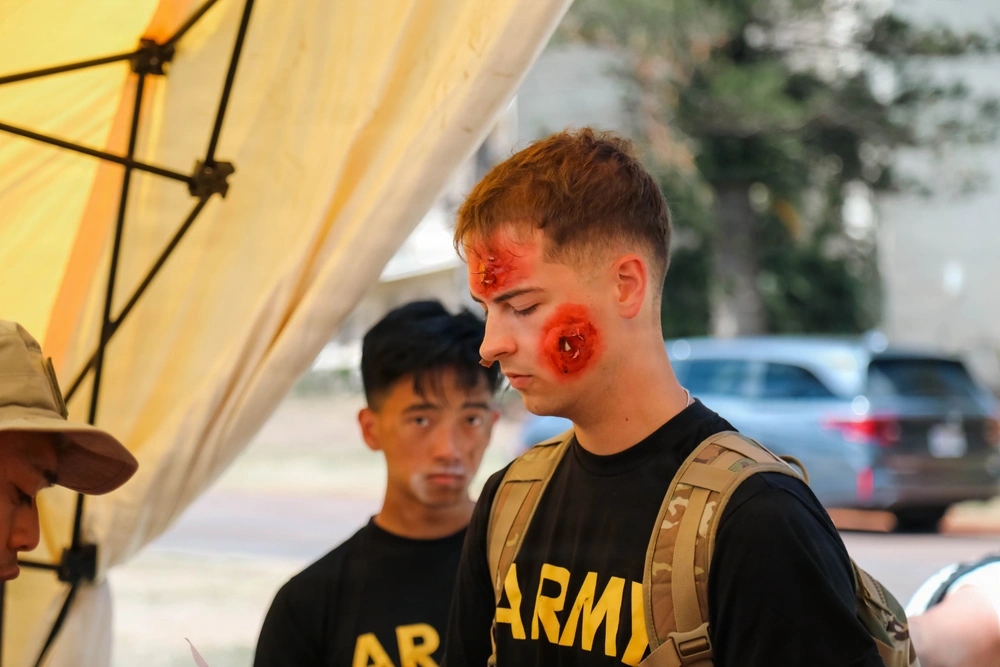 A solider participates in a "mass casualty exercise" during RIMPAC 2026.
👉 RIMPAC 2026, the world’s largest naval war exercise, is underway in the Pacific, with militaries conducting drills including mass casualty response exercises. Behind the U.S.-led exercises is a massive military buildup aimed at preparing for war on China. These exercises deepen tensions, consume vast resources, and reinforce a cycle of militarization in a region already on the frontlines of climate change.
👉 China released an updated climate strategy through 2030 focused on integrating renewable energy across its economy. The plan goes beyond simply expanding clean energy production, emphasizing the need to connect renewable power to industry, transportation, and improved energy infrastructure. At a time when climate disasters are escalating, these developments underscore the need for greater cooperation with China on climate solutions rather than the U.S.’s increasingly costly and dangerous drive toward war.
👉 The National Science Foundation has introduced a new policy that effectively restricts scientific collaboration with China, further extending the U.S. campaign to securitize science and technology. Framed as a matter of national security, the policy treats international research cooperation as a threat and deepens the new Cold War mentality that has already led to the persecution of Chinese scientists and scholars. Policies that restrict collaboration only undermine our ability to develop the sustainable solutions needed to confront global crises like climate change.
Featured Articles
RIMPAC, China, & the Cost of War
By Megan, CODEPINK
"In the name of 'protecting' the Pacific from a future imaginary threat, the United States is harming the very communities it claims to defend through military buildup, environmental degradation, and the transformation of islands into staging grounds for war..."
The $1.5 Trillion Climate Solution We Can't Ignore
By Aaron, CODEPINK
"These climate disasters are not new, but Congress is now preparing to vote on an obscene $1.5 trillion Pentagon budget — and for the first time in years, a notable number of Democrats are expected to vote no. Cutting it could meet the speed and scale needed."
Travel to China!
|
|