“All men must be answerable to the law.” —Chief U.S. Prosecutor at the Nuremberg trials, subsequent Supreme Court Justice Robert Jackson
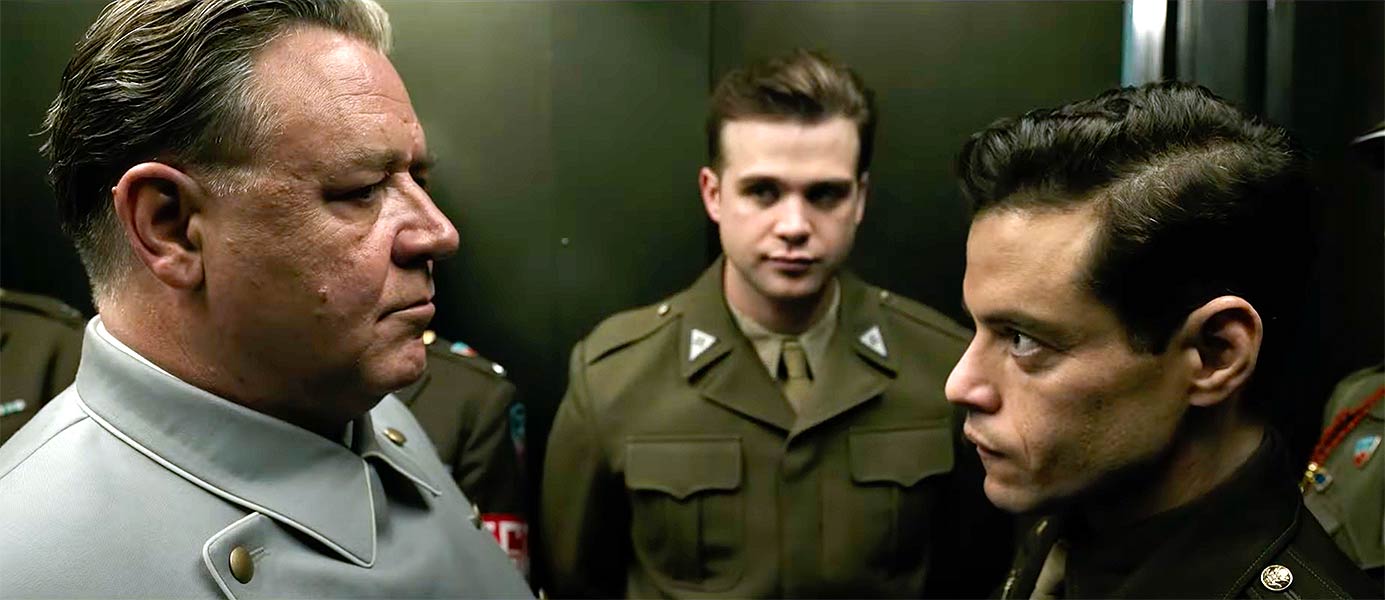
Last week, I watched a sneak peek of Nuremberg, the new film about the Nuremberg trials, which is scheduled for release this week. I learned a lot about the trials that I didn’t know before, and what stood out the most to me was just how difficult it was to bring people to justice. But it did ultimately happen, and a form of justice prevailed. My takeaway was that this film should be seen as a call to action, highlighting our responsibility to hold those accountable for the genocide in Gaza.
The Nuremberg trials were a landmark moment because they established the principle that individuals, not just states, could be held criminally responsible for war crimes and other crimes against humanity, regardless of their official position. The film, which follows the psychological examination of high-ranking Nazi officials like Hermann Göring, focuses on the legal and moral effort to hold leaders accountable in order to prevent something like the Holocaust from happening in the future. But first, they had to get them to trial — a major challenge in itself.
One challenge was actually defining and enforcing a new system of justice; before the Holocaust, there was no system in place to deal with such egregious crimes against humanity. In the film, we see the discourse around how to hold those who commit grave international crimes legally accountable. That discourse eventually provided the international legal framework to institutions such as the International Court of Justice (ICJ) and the International Criminal Court (ICC). Furthermore, it was also the basis for the international cases, such as the current case against Israel for war crimes and the crime of genocide, brought by Naledi Pandor of South Africa to the ICJ in December 2023.
Another challenge was getting the international community to agree to hold trials in the first place. There was an international debate around the legality of the procedures as well as concern over what precedent the trials would set. Yet, just as international buy-in was crucial to bringing the Nazis to trial, so too is the importance of all countries honoring the legacy of Nuremberg by bringing those accountable for the genocide in Gaza to justice. However, as it stands now, many countries, like the United States, are choosing to ignore the arrest warrants issued by the ICC against Israel’s Benjamin Netanyahu and Yoav Gallant. It is up to us to pressure these countries into doing the right thing and honoring the arrest warrants.
In the film, we see footage presented to the court of what took place at the camps; those images are so horrifyingly similar to the images we see from Gaza. We have been witnesses to Israel’s war crimes in Gaza every day for over two years now. What are the courts waiting for? It was in the Nuremberg trials where some of those images were seen for the first time by those in the courtroom, yet we have been living with images from Gaza daily.
One of the explorations of the film is how did this happen? The world witnessed crimes against humanity that they never wanted to see again; the Nuremberg trials were meant to be the end of it, and yet we are living through it again. Those perpetrating the crimes are doing so with the same banality as happened in WWII.
The Nuremberg trials’ legacy was meant to deter, yet that legacy is being washed away by the international community’s failure to prosecute war crimes today. For instance, the international community has documented evidence of the United States' illegal invasion and occupation of Iraq that resulted in the death of millions of innocent Iraqis. Yet, former U.S. President George Bush is peacefully painting pictures and enjoying retirement, and former Vice President Dick Cheney recently passed away peacefully at the age of 84. Today, we see it happening in real time with the ongoing genocide in Gaza, bringing into question whether the international system has failed to fully prevent such atrocities.
With the release of the film, we should be calling on the ICJ to move forward, using Nuremberg as a benchmark for demanding justice for the victims in Gaza. As I left the theater, I asked those in the audience about their experience. They all felt deeply that it should never happen again — and yet it is in Gaza. Join us as we engage the Nuremberg audiences in calling on the ICC to act.